


Precision Fermentation, Precisely Done: How Vivici is Changing the Game of Functional Protein
What Precision Fermentation Really Is
At its core, precision fermentation technology is a modern evolution of a process people already know well, since fermentation has been used for centuries to make products like beer, wine, and yogurt by growing microorganisms on specific nutrients and using the whole mixture as the final food.
With precision fermentation food production, the goal is different. We still grow microorganisms on specific nutrients, but we design them to produce one specific molecule with a high level of consistency. That’s what makes protein coming from a precision fermentation process precise.
This approach builds on decades of established biotechnology. Microorganisms have long been used as controlled production systems for specific molecules, from recombinant insulin produced using bacteria or yeast to food-processing enzymes used in baking to keep bread fresher for longer and help reduce food waste (Food Nation Denmark, n.d; Riggs, 2021) . Precision fermentation applies that same proven logic to food proteins, enabling ingredients with defined composition, consistent quality, and targeted functionality .
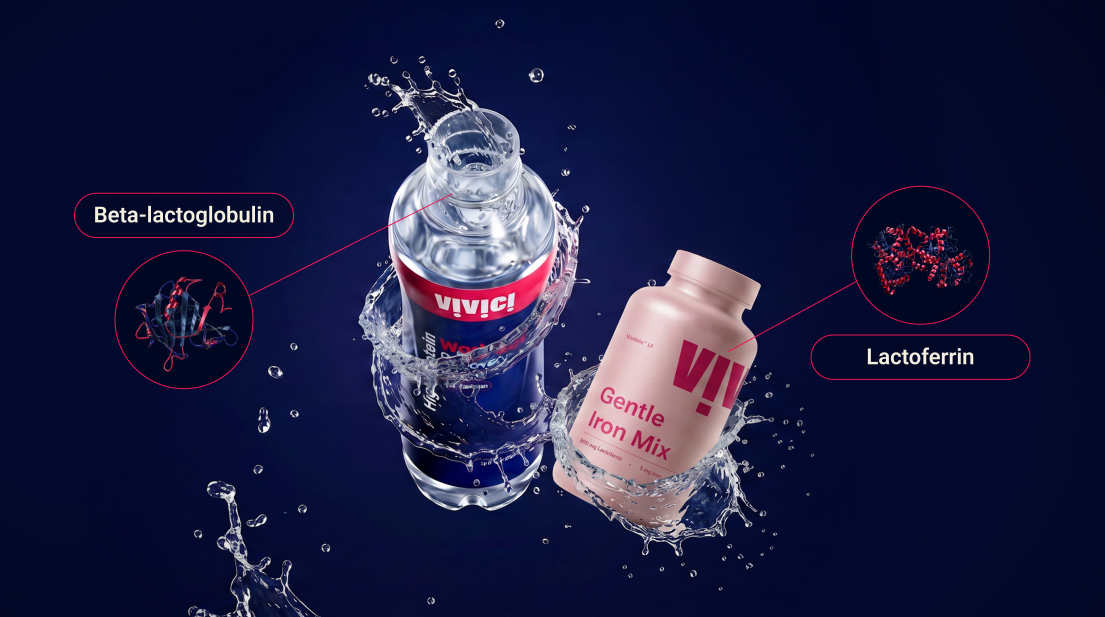
Instead of harvesting whole cells or fermenting a complete mixture, precision fermentation allows Vivici to produce individual ingredients like beta-lactoglobulin or lactoferrin. These proteins are the bioequivalent of their animal-derived counterparts, but made without animals, and the result is a new class of protein ingredients that combine nutritional quality, functional performance, and scalability.
How Does Precision Fermentation Work - Step by Step
A common question is: how does precision fermentation work in practice? Behind the simplicity of the final ingredient is a highly controlled, multi-step process.
1. Selecting the microorganism
At Vivici, we work with Pichia pastoris (renamed to Komatagaella phaffi) as our production platform. This is a yeast platform that has a long history of safe use and is GRAS (generally recognized as safe) and QPS (Qualified Presumption of Safety). The strain is well studied and already widely used in industrial biotechnology as a reliable host with strong performance characteristics for food-grade protein production.
2. Selecting the protein
Using this technology, we can produce almost any protein and even improved variants of existing proteins. We have decided to produce beta-lactoglobulin because of its nutritional quality and functionality in food applications and lactoferrin because of its bioactivity.
3. Engineering the strain
We designed, tested and refined many genetic configurations, optimized promoters and codon usage and introduced multiple copies of the target genes as well as helper proteins that increase the protein export machinery to develop yeast strains that produce our target protein efficiently and consistently.
4. Fermentation
Once a strain performs well in the laboratory, we do piloting experiments in bioreactors that allow us to control and monitor a fermentation process at high precision to yield a stable and reproducible process. Subsequently, the selected strains are tested at demo-scale, which is representative for industrial production. We start small, but these conditions are designed to scale reliably to industrial scale stainless-steel fermenters. This is where precision fermentation technology needs to prove its robustness.
5. Downstream processing
After fermentation, we separate the yeast from the medium and isolate the protein from the supernatant (the liquid portion). Since our proteins are excreted in the medium, the level of contaminating proteins present in the supernatant is low. Through subsequent purification and concentration steps, we arrive at a highly pure protein powder.
6. Application testing
Finally, we test how the protein behaves in real formulations. These protein ingredients need to perform in beverages, shots, and other applications.
This end-to-end control is exactly what defines a true precision fermentation process.
The Vivici Way: What Makes Our Approach Different
Vivici’s strength isn’t just in developing strains but also in building the entire ingredient value chain.
Every step is connected: from strain engineering and process development to downstream process optimization, regulatory readiness, application testing, and customer engagement experience. This allows Vivici to move from lab to market with reliability and speed, while maintaining consistency at scale.
Our foundation plays a big role here, because we combine deep biotechnology expertise with decades of dairy protein science, supported by a strong talent ecosystem. That integration enables Vivici to deliver precision fermentation food solutions that work not only scientifically, but commercially too.
What Makes Vivici’s Proteins Unique
Vivitein™ BLG: Performance-Driven Functional Protein
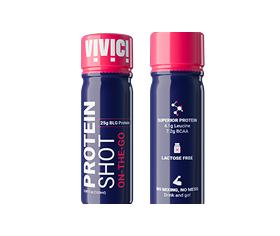
Vivici’s flagship ingredient, Vivitein™ BLG, is a beta-lactoglobulin protein produced through precision fermentation technology and verified to be bioequivalent at every structural level.
From a formulation perspective, it offers a combination of attributes that R&D teams care about:
- High purity above 90%
- A BCAA-rich profile with 29% BCAAs and 16% leucine
- Superior heat stability at both acidic and neutral pH
- Low viscosity and excellent clarity
These characteristics allow Vivici’s protein ingredients to perform well in applications like clear, refreshing beverages; formats that are difficult to achieve with many conventional or plant-based proteins. Compared to conventional whey protein isolate, Vivitein™ BLG enables lighter sensory profiles while maintaining nutritional quality.
Vivitein™ LF: Unlocking Bioactive Precision at Scale
Lactoferrin has long been considered one of dairy’s most valuable bioactive proteins. Naturally present in milk at very low concentrations, it plays a critical role in iron regulation, microbiome modulation, and inflammatory balance.
Historically, lactoferrin production has been constrained by limited supply, high extraction complexity, and cost volatility. This has restricted its use primarily to niche or high-cost applications.
Through precision fermentation technology, Vivici is advancing scalable lactoferrin production, transforming what was once known as “pink gold” into a commercially viable ingredient platform. For R&D teams, this means:
- Access to high-purity lactoferrin without animal dependency
- Greater batch-to-batch consistency
- Improved formulation flexibility at meaningful inclusion levels
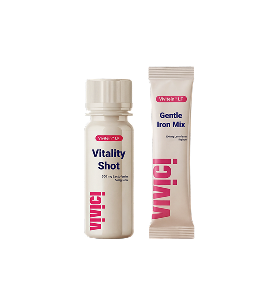
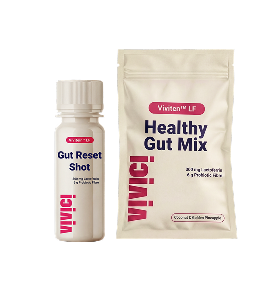
- The ability to develop targeted health platforms in vitality, gut health, and performance recovery
Vivitein™ LF represents a shift from functional protein performance to biologically active precision — expanding the design space for next-generation protein ingredients.
The Sustainability Advantage
One of the most compelling reasons to adopt precision fermentation food systems is sustainability. Producing proteins this way significantly reduces dependence on land- and water-intensive agriculture.
An independent life cycle assessment (LCA) shows Vivici’s precision fermentation platform delivers significant sustainability benefits compared to conventional dairy-derived protein ingredients. For example, Vivitein™ BLG demonstrates substantial reductions versus conventional whey protein isolate, including:
- 68% lower carbon footprint
- 86% less water usage
- 61% less land usage
- 90% less impact on soil
Furthermore, as lactoferrin production transitions from traditional extraction to fermentation-based systems, similar systemic environmental efficiencies are expected, further demonstrating how precision fermentation technology can decouple protein performance from agricultural intensity.
Beyond Whey: Expanding the Bioactive Protein Frontier
While beta-lactoglobulin protein demonstrates the functional strength of precision fermentation, lactoferrin represents its bioactive potential.
Lactoferrin production has historically been limited by biological scarcity. Through precision fermentation technology, Vivici is working to make this clinically relevant protein available at scale, enabling innovation in vitality support, microbiome-focused formulations, and advanced active nutrition platforms.
This signals a broader shift: precision fermentation food systems are not limited to structural dairy proteins. They can unlock a portfolio of high-value, high-impact protein ingredients that were previously supply-constrained.
For R&D leaders, this opens a new design paradigm where performance, bioactivity, and sustainability can be engineered simultaneously.
The Takeaway
For me, precision fermentation isn’t just about making proteins differently - it’s about making them better.
By combining scientific control, scalability, and sustainability, precision fermentation technology bridges the gap between environmental responsibility and real-world product performance. At Vivici, we’re using it to deliver sustainable protein production that fits modern lifestyles and demanding formulation needs.
Whether enabling crystal-clear performance beverages with Vivitein™ BLG or unlocking scalable lactoferrin production through Vivitein™ LF, our approach demonstrates that precision fermentation protein is no longer experimental — it is commercially actionable.
The future of protein isn’t theoretical anymore. It’s here, it’s fermentative, and it’s being built with precision alongside our partners.
You may also like:
References
Food Nation Denmark. (n.d.). Enzymes keep bread fresher for longer. https://foodnationdenmark.com/cases/novozymes-enzymes-pave-the-way-for-better-baki ng/
Riggs, A. D. (2021). Making, cloning, and the expression of human insulin genes in bacteria: The path to Humulin. Endocrine Reviews, 42(3), 374–380. https://doi.org/10.1210/endrev/bnaa029